When a basement floor drain backs up, raw sewage spreads across concrete, carpet, and drywall fast. Call 24/7 for immediate Yakima containment and extraction.
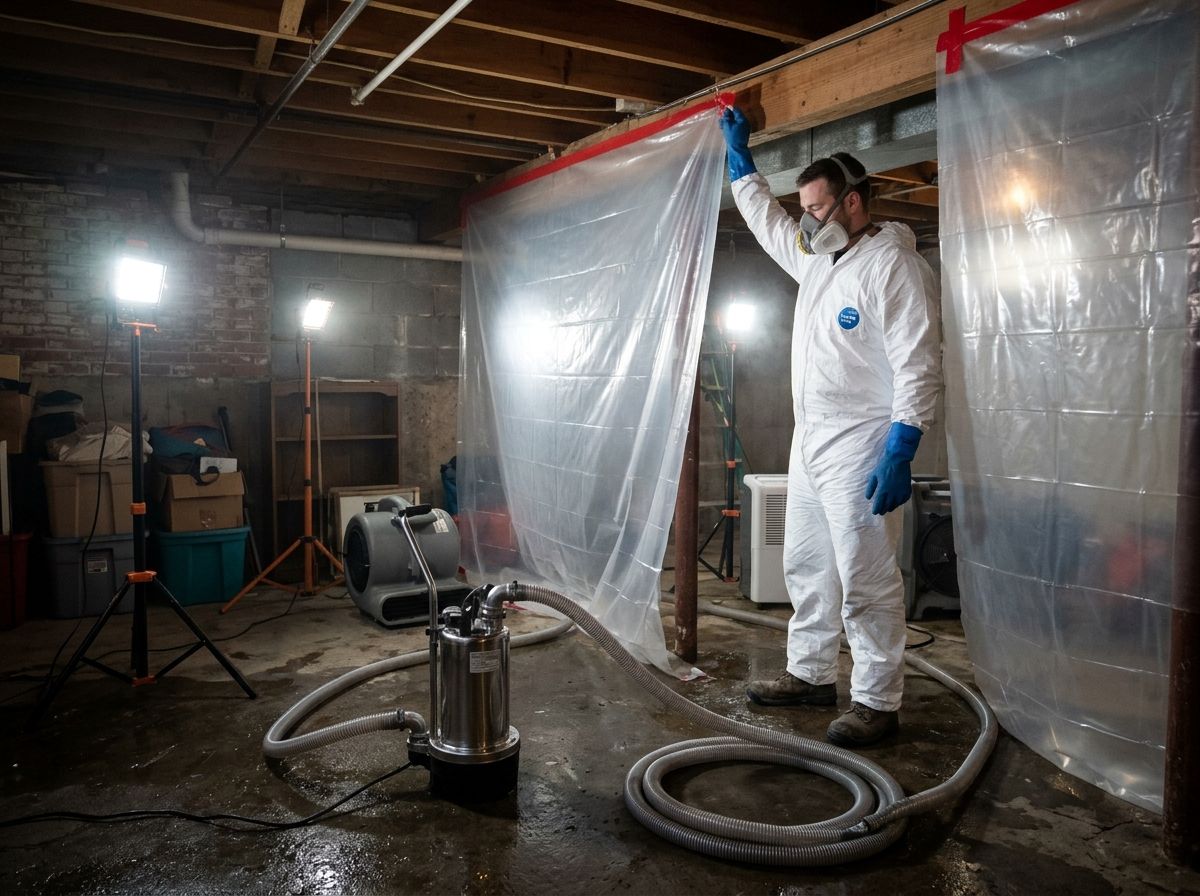
Containment barriers and commercial pumps stop basement sewage from reaching upstairs living spaces.
Why Yakima Basements Face Sudden Floor Drain Backups
Older homes across Central Yakima, Barge-Chestnut, and Summitview often sit over full or partial concrete basements. Many of those basements include laundry tubs, downstairs bathrooms, or gravity floor drains tied into aging clay or cast-iron side sewer laterals. When tree roots or heavy winter grease block that private lateral, wastewater exits at the lowest drain first.
While the City of Yakima Wastewater Division maintains public street mains, the private side sewer running from your foundation to the street belongs to the homeowner. Spring Yakima River runoff and sudden freeze-thaw cycles can saturate yard soil and push extra pressure into cracked lateral seams. Calling Yakima sewage cleanup right away stops contaminated water from soaking into wall framing and stored belongings.
Electrical and Health Safety Before Crews Arrive
Walking into dark basement water carries serious electrocution and pathogen risks. Take these practical safety steps while staying on dry ground:
Avoid standing water near power: Never touch appliances, extension cords, or breaker panels while standing on wet concrete.
Shut off your furnace and HVAC fan: Turning off the thermostat prevents return ducts from pulling sewer gases and airborne droplets upstairs.
Stop all indoor water use: Do not flush toilets, run kitchen sinks, or start dishwashers until a plumber clears the blocked line.
Keep family and pets upstairs: Close the basement door and place a damp towel along the bottom gap to slow odor drift.
Skip household bleach and shop vacs: Standard vacuums spray contaminated mist into the air, and bleach cannot sanitize porous wood or drywall.
What Professional Basement Sewage Cleanup Includes
Independent local restoration crews bring protective suits, containment poly, and high-capacity extraction equipment built for Category 3 black water.
1. Pumping and Solid Waste Removal
Technicians deploy submersible pumps and truck-mounted vacuum hoses to pull standing liquid and sludge out of concrete sumps, utility corners, and carpeted rec rooms.
2. Controlled Drywall Flood Cuts and Tear-Out
Porous materials absorb raw sewage bacteria permanently. Crews remove ruined carpet, pad, baseboards, and wet drywall 12 to 24 inches above the visible water line so hidden wall cavities open up for cleaning.
3. Concrete Disinfection and Structural Drying
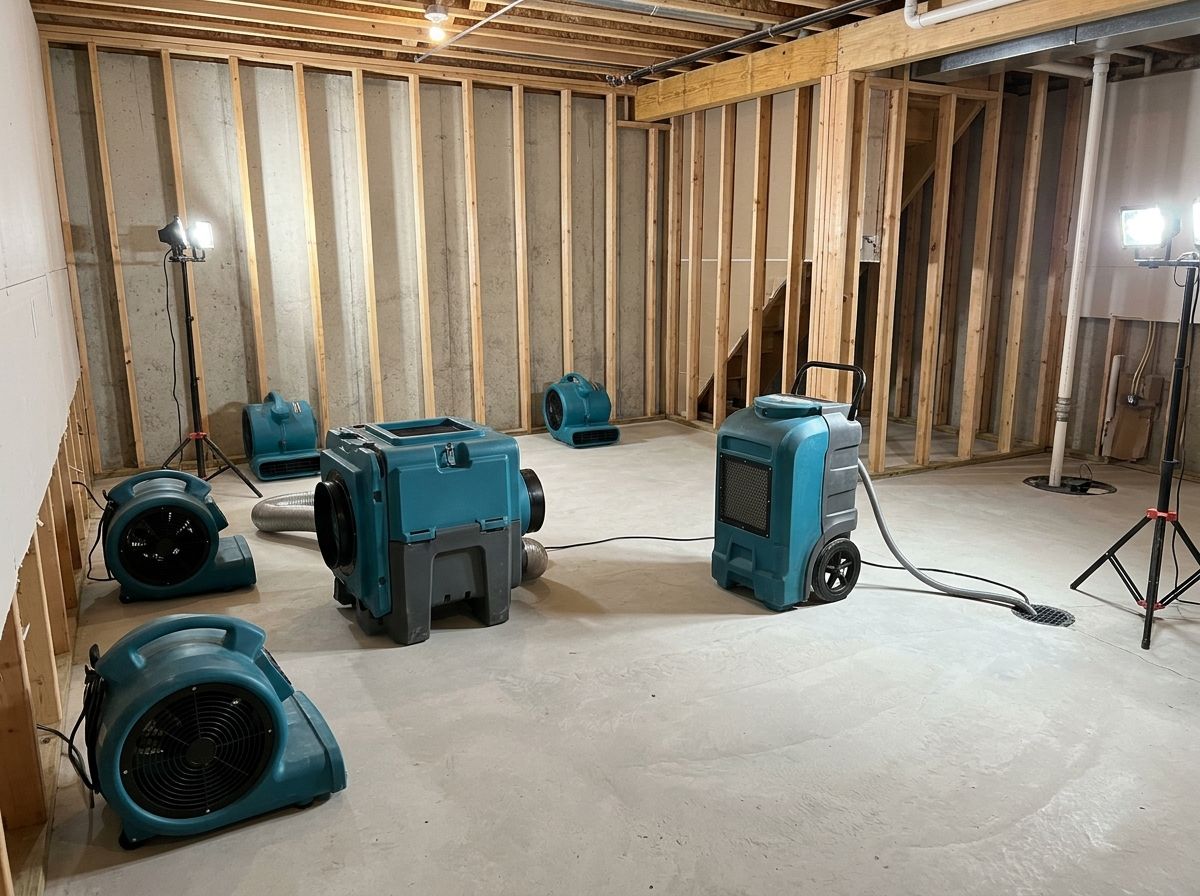
Once debris is bagged and hauled away, technicians pressure-wash and scrub concrete slabs and block walls with EPA-registered antimicrobials. Commercial dehumidifiers and air movers then dry sill plates and wooden studs to verified dry moisture targets.
Insurance Documentation for Basement Backups
Before throwing ruined basement items into the alley, let technicians photograph the water line and damaged materials. Clear photo logs, itemized tear-out notes, and daily moisture charts help homeowners navigate sewer backup endorsements with fewer adjuster delays. If odors linger after pumping, pair extraction with sewage sanitization and odor removal.
Is it safe to walk into a flooded basement to check my breaker box?
No. Standing sewage conducts electricity from submerged outlets, freezers, or furnace wiring. If your electrical panel sits inside the wet basement, stay on dry stairs and call a licensed electrician or utility shutoff first.
Why do technicians cut away drywall 12 to 24 inches above the water line?
Gypsum board acts like a sponge and pulls contaminated wastewater upward through capillary action. Cutting cleanly above the wicking line exposes wet sill plates and wooden studs so crews can sanitize and dry framing completely.
Will my homeowners insurance cover a basement sewer backup in Yakima?
Standard policies often exclude main sewer backups unless you carry a water backup endorsement. Independent cleanup crews document water depth, photo logs, and daily moisture readings so you have clear proof for your adjuster.
Our 3-Step Sewage Containment & Drying Process
Raw sewage spreads pathogens and moisture fast. Independent local crews follow a strict three-stage protocol to return your property to a clean, dry state.
STEP 01 • CONTAINMENT
Containment & Safety Isolation
Technicians isolate Category 3 black water immediately, shut off HVAC circulation, and seal clean rooms with heavy poly barriers.
STEP 02 • EXTRACTION
Extraction & Safe Tear-Out
Truck-mounted pumps remove standing waste and sludge fast. Crews safely bag and haul ruined carpet, pad, baseboards, and soaked drywall.
STEP 03 • SANITIZATION
Sanitization & Structural Drying
Hard surfaces receive EPA-registered antimicrobial scrubbing. Commercial air movers, HEPA scrubbers, and dehumidifiers dry framing to verified moisture targets.
Containment sheeting and commercial pumping stop black water from reaching clean rooms.HEPA air scrubbers and dehumidifiers eliminate sewer odors and dry exposed wood framing.
Yakima Areas Covered for Basement Sewage Cleanup
Emergency dispatch reaches homes and businesses across Yakima ZIP codes 98901, 98902, 98903, 98908 day and night.