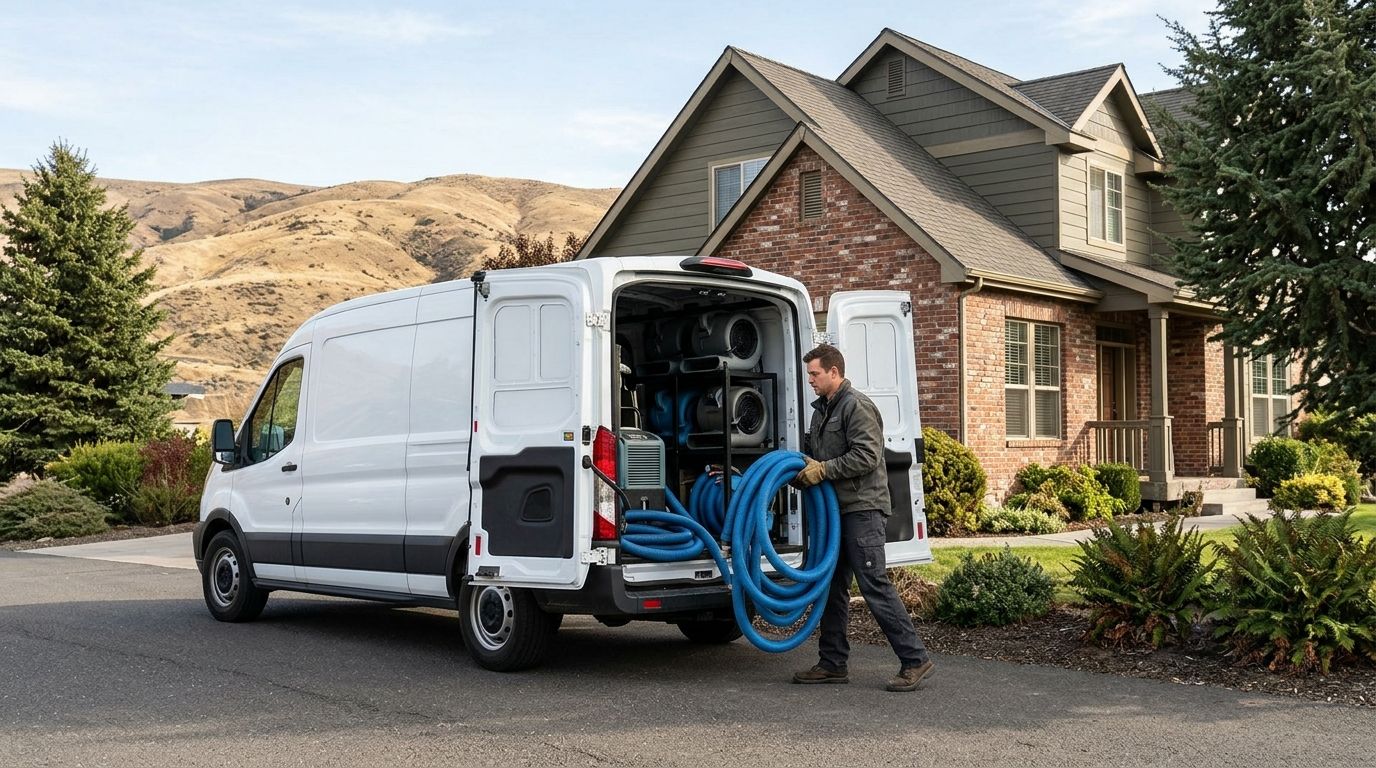
Truck-mounted vacuum lines reach deep into tight residential crawl spaces across Yakima.
Why Crawl Space Sewage Goes Unnoticed in Yakima Homes
Across West Valley, Fruitvale, East Yakima, and Terrace Heights, thousands of single-story homes sit on raised perimeter foundations with vented crawl spaces. Because homeowners rarely crawl under their houses, a cracked cast-iron wye fitting, separated PVC coupling, or backed-up cleanout can leak raw sewage onto dirt and plastic sheeting for days before anyone notices.
By the time a strong odor reaches your kitchen or hallway, waste has often pooled across a large section of the crawl space floor. Calling Yakima sewage cleanup right away protects both your wooden subfloor framing and your indoor air quality.
Early Warning Signs Under Your Floors
Watch for these telltale clues pointing to an active under-home sewer spill:
Persistent rotten-egg smells: Odors grow stronger whenever your furnace or central air kicks on.
Soft or cupping hardwood planks: Moisture evaporating upward swells plywood subfloors and warps laminate seams.
Sudden drain fly swarms: Tiny dark flies gather around bathroom vents, floor registers, and foundation access doors.
Gurgling drains across multiple rooms: Slow drainage paired with damp soil near your foundation vents signals a leaking lateral.
Safety Steps Before Entering Any Crawl Space
Never crawl beneath your home without proper protection when raw sewage is present:
Stay out of enclosed waste zones: Confined crawl spaces trap concentrated sewer gases and bacteria.
Shut off forced-air heating or cooling: Keep under-home air from entering leaky return ductwork.
Turn off main indoor water fixtures: Stop adding fresh wastewater until a plumber repairs the broken pipe.
Check electrical wiring overhead: Low-hanging junction boxes and sump cords create shock hazards over wet mud.
Step-by-Step Under-Home Extraction and Sanitization
Independent local technicians suit up in full protective gear and run long extraction hoses straight from the driveway through your crawl space hatch:
Standing sewage pumping: Remove pooled black water from low soil pockets and concrete footings.
Ruined vapor barrier and insulation tear-out: Bag and remove torn plastic sheeting and contaminated fiberglass batts hanging between floor joists.
Sludge removal and surface treatment: Shovel out solid waste layers and apply EPA-registered antimicrobials across floor joists, sill plates, and plywood subfloors.
Controlled drying and fresh poly sheeting: Run low-profile air movers and dehumidifiers until moisture readings drop into safe ranges, then install clean vapor barrier sheeting.
Insurance Coverage Notes for Crawl Space Leaks
Gradual pipe drips that ran unnoticed for months are often disputed by insurance carriers, while sudden drain breaks or main sewer backups are typically documented differently. Asking technicians for clear before-and-after photos and subfloor moisture logs gives you solid records if you file a claim. Need fast extraction for an upstairs spill too? Review our toilet and sewer line overflow service.
How does sewage under my house affect upstairs indoor air?
Warm air rises naturally from your crawl space through floor vents, plumbing cutouts, and HVAC duct seams. That upward airflow pulls hydrogen-sulfide sewer smells and dampness straight into bedrooms and living rooms.
Can you clean a dirt or gravel crawl space after a pipe break?
Yes. Crews pump standing liquid first, then carefully shovel out contaminated topsoil or sludge, treat the ground with antimicrobial lime or EPA-registered solutions, and lay fresh heavy-duty poly vapor barriers.
Should wet fiberglass crawl space insulation be removed?
Yes. Soaked fiberglass batts sag away from subfloors, trap raw waste odors against wooden floor joists, and block proper airflow during structural drying.
Our 3-Step Sewage Containment & Drying Process
Raw sewage spreads pathogens and moisture fast. Independent local crews follow a strict three-stage protocol to return your property to a clean, dry state.
STEP 01 • CONTAINMENT
Containment & Safety Isolation
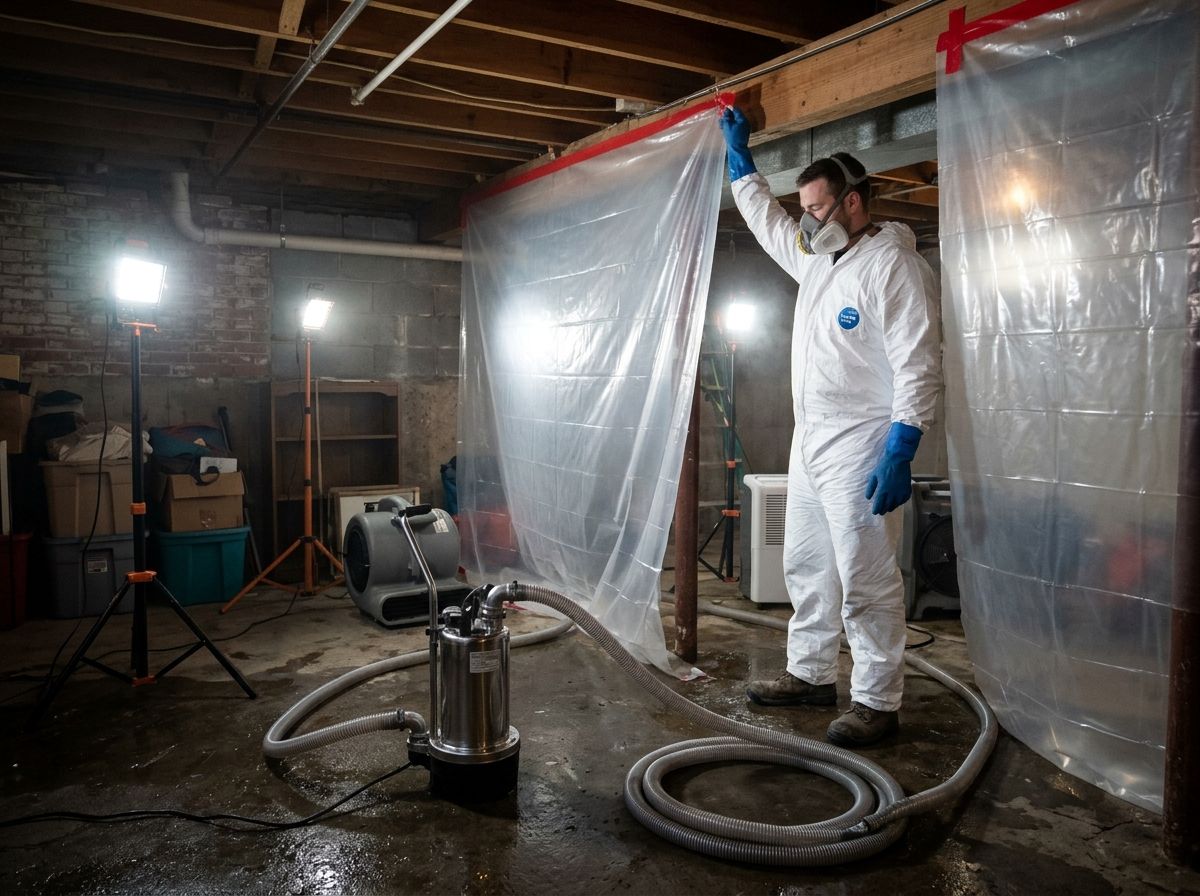
Technicians isolate Category 3 black water immediately, shut off HVAC circulation, and seal clean rooms with heavy poly barriers.
STEP 02 • EXTRACTION
Extraction & Safe Tear-Out
Truck-mounted pumps remove standing waste and sludge fast. Crews safely bag and haul ruined carpet, pad, baseboards, and soaked drywall.
STEP 03 • SANITIZATION
Sanitization & Structural Drying
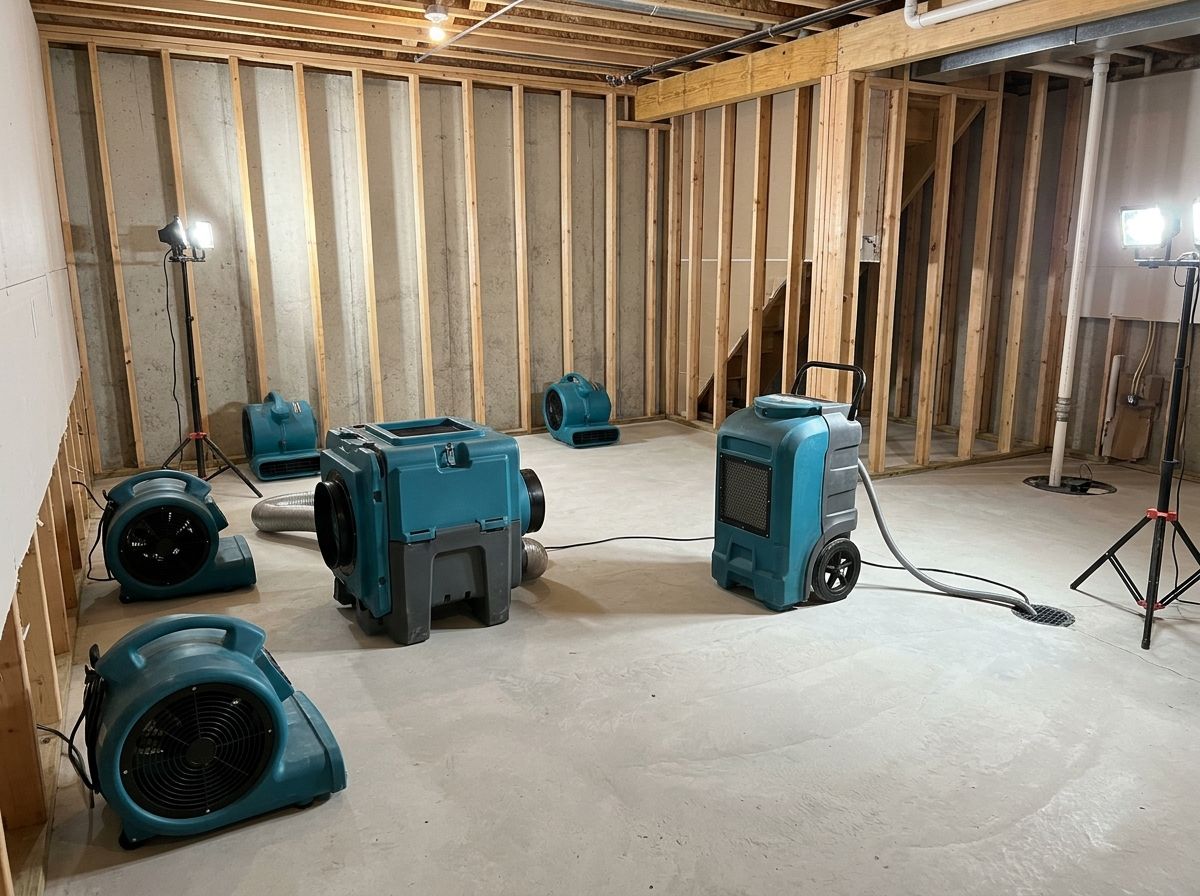
Hard surfaces receive EPA-registered antimicrobial scrubbing. Commercial air movers, HEPA scrubbers, and dehumidifiers dry framing to verified moisture targets.
Containment sheeting and commercial pumping stop black water from reaching clean rooms.HEPA air scrubbers and dehumidifiers eliminate sewer odors and dry exposed wood framing.
Yakima Areas Covered for Crawl Space Sewage Removal
Emergency dispatch reaches homes and businesses across Yakima ZIP codes 98901, 98902, 98903, 98908 day and night.